
We Were Never Really Taught Fitness
Growing up, every summer holiday in Bhopal came with a ritual. The elders of the family would sit together and read through the matrimonial section of the newspaper looking for suitable matches. Every advertisement seemed to ask for the same thing: thin and fair.
If I had ten rupees for every matrimonial ad that used those two words in any Indian language, I wouldn’t be writing this essay today. I’d be touring the world with enough money to annoy future generations.
The reality, however, wasn’t funny.
The pressure to be thin and fair was so deeply ingrained that many girls grew up believing they were unattractive long before anyone had actually told them they were.
I was fortunate. My mum never made me feel like my worth depended on a weighing scale and I grew up believing I was beautiful. But I watched friends and cousins constantly criticised about their weight and complexion by the very people who loved them most. The reason was almost always the same: they were worried it would affect their marriage prospects.
Perhaps that’s why so many of us grew up believing that fitness meant being thin rather than being healthy.
The Goal Became Thin, Not Healthy
The pressure to stay thin is something almost every Indian woman has dealt with at some point in her life. Fitness became less about feeling strong and more about taking up less space.
I genuinely cannot think of a diet I haven’t seen someone around me try. GM. Keto. No carbs. Only salads. Fruit cleanses. Every few years, a new miracle would arrive promising the same thing – a smaller body. And every few years, I’d watch someone eventually give up because extreme diets were never meant to be sustainable.
The problem was never that women lacked discipline. The problem was that we were chasing the wrong goal.
I wish more girls were taught to eat well for their health instead of their weight. I wish school science classes spent as much time explaining hormones as they did reproduction. I wish someone had told us that our weight naturally fluctuates through the month because of our menstrual cycle instead of making us panic every time the weighing scale went up by a kilo. And I wish someone explained the effects of cortisol, perimenopause and menopause just as well as they explained the consequences of bad decisions.
Perhaps then, fewer women would spend years fighting perfectly normal biology.
The Scale Wasn’t The Problem
Even while I was fit for most of my life, late in my thirties, however, I did become overweight. The stress of a terrible relationship elevated my cortisol levels, caused inflammation and left me eating not because I was hungry, but because I was unhappy. I was eating emotions I didn’t know how to express. I was convincing myself I was happy when I wasn’t.
My blood tests were perfect, but I was constantly tired. I had brain fog, I was emotionally exhausted and I was carrying more stress than I realised. I could comfortably clear a 16 MET treadmill test, yet I was emotionally drained. According to every health report, I was doing just fine.
The problem was that I wasn’t.
The moment that changed my definition of fitness was when I discovered that my partner was body-shaming me to the person he was cheating on me with. For the first time, I stopped asking myself how much I weighed and started asking why I wasn’t healthy despite doing everything I thought I was supposed to.
The answer wasn’t another diet, it was stress.
Once I removed that constant negativity from my life, I didn’t need a crash diet or six-hour workouts. I simply went back to eating well, moving regularly and giving my mind a chance to breathe.
Turns out my body wasn’t fighting me, it was trying to tell me something all along.
When Fitness Stops Being About The Scale
A healthy body isn’t just one that’s lighter. It’s one that’s well nourished, hormonally balanced, mentally resilient and physically capable. It deserves food that fuels it, movement that strengthens it and rest that allows it to recover.
We spend far too much time chasing numbers. The number on the scale. The number stitched inside our jeans. The number a man thinks is attractive. Somewhere along the way, we forgot to ask a much more important question.
How do I actually feel?
Perhaps if more women measured their health by their energy instead of their weight, by their strength instead of their size, and by their peace of mind instead of someone else’s approval, our relationship with fitness would look very different.
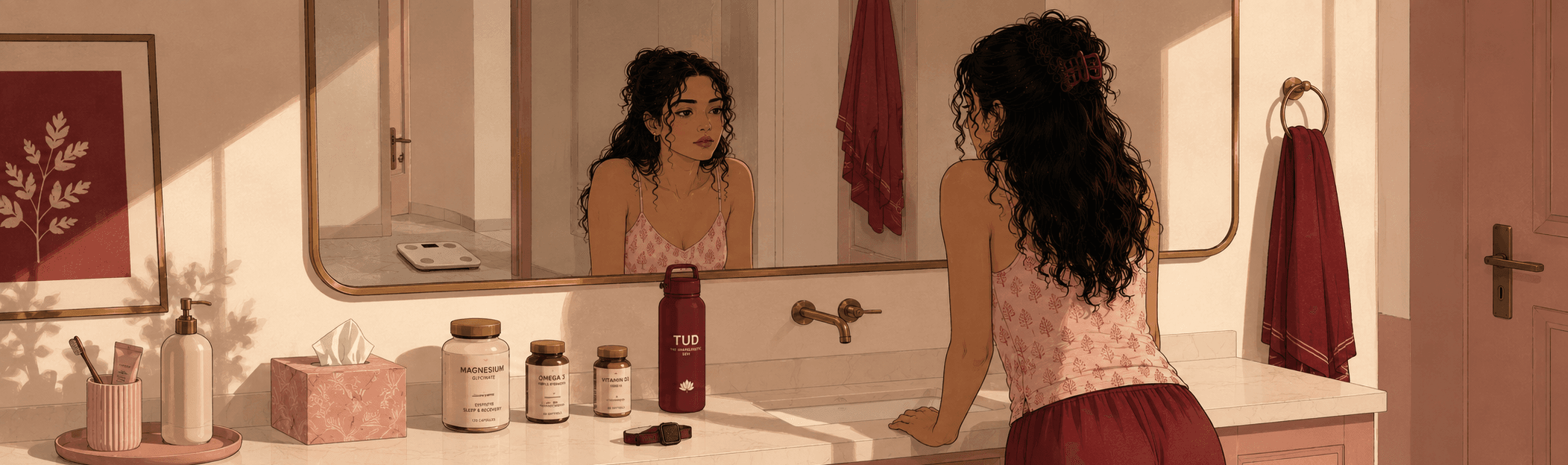
A weighing scale has its place, but it will never measure your hormones, your stress, your mental health or your happiness. The sooner we learn to listen to our bodies instead of just the number on the scale, the sooner the weighing scale stops deciding how healthy we really are.
Leave a Reply