
We Spent To Be Seen
One of the strangest things about growing older is that money quietly starts feeling different. It isn’t necessarily that we earn more or spend less. We simply start spending differently because our priorities quietly change.
Our twenties were all about chasing trends. We wanted the coolest thing everyone else had, even if it barely lasted a season. We spent more time thinking about how the world saw us than who we actually wanted to become.
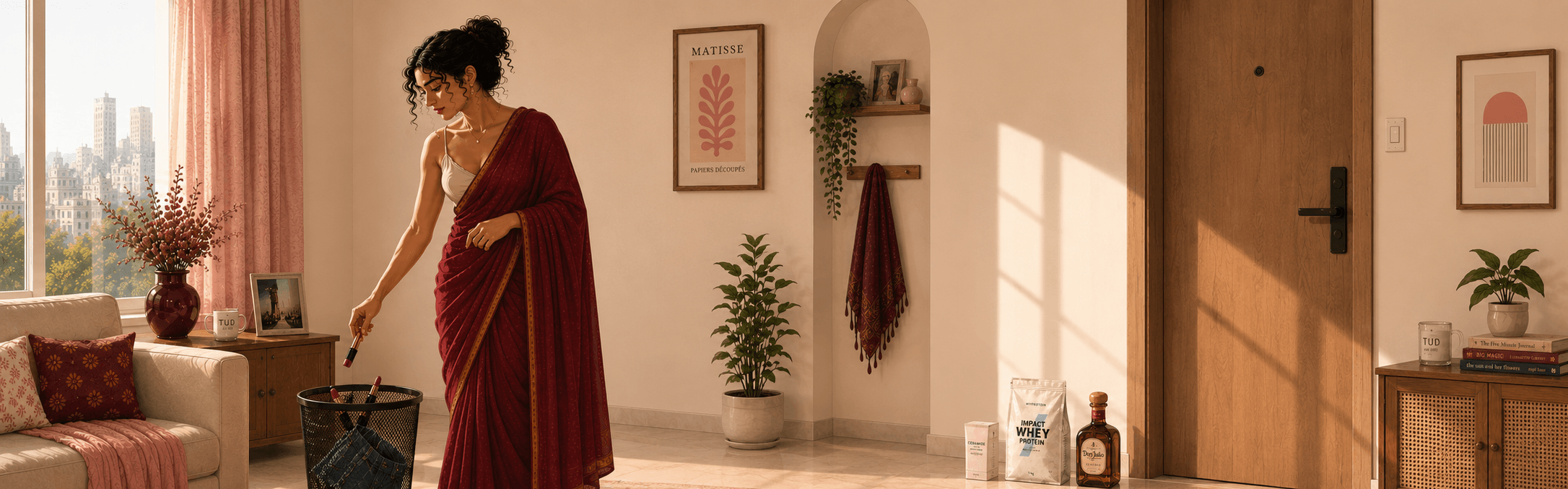
For me, it was makeup. Vanity quietly became a big part of how I wanted the world to see me. I’d own thirty lipsticks and still somehow convince myself I needed another one. Nights out felt more important than mornings after, and as long as I had enough money left for two beers at the coolest place in town, life felt sorted.
Looking back, twenty-year-old me wasn’t making financial decisions. She was making social ones.
Then Our Spending Starts Growing Up
Our thirties are a strange in-between decade. Much like our relationship with home quietly changes, so does our relationship with money.
A small, insecure part of us still says yes to parties we know we’ll probably be bored at. We still occasionally spend under peer pressure, except now the beer has quietly become a gin and tonic because it’s fewer calories and somehow feels like a more responsible bad decision.
This was also the decade I discovered skincare. I had always been genetically blessed with good skin, but I finally understood why my mum had spent years telling me to look after it. I still loved buying lipsticks, but suddenly chapped lips bothered me more than the colour I was wearing. It wasn’t that I had stopped liking beautiful things. I had simply started valuing things that lasted longer than a trend.
Without realising it, our spending slowly starts shifting from wanting to impress other people to wanting to take better care of ourselves.
Comfort Becomes The Luxury
Then somewhere around our forties, another quiet shift happens.
It’s almost like a subtle pre-midlife crisis, except instead of buying a sports car, we start buying things that genuinely improve our lives.
Comfort, reliability and durability became the focus, not only in our relationships but also in the way we spent our money. We’d rather buy one good pair of Zara shorts that lasts five summers than ten pairs from Hill Road that barely survived one summer. Credit card statements begin filling up with protein powder, creatine, ceramides and hobbies that make us slower instead of busier.
The funny thing is that it doesn’t even feel like spending more. In retrospect, we probably were. We were just spending better.
Buying lipstick now feels less exciting than it did in my twenties. Not because it’s a waste of money, but because I immediately think about finishing the ones I already own first. Consumption slowly stops becoming exciting and starts becoming responsibility.
Money Starts Buying Peace
Perhaps that’s why money feels so different in our forties.
It stops being about collecting things and starts becoming a tool for building the life we actually want to live.
Our bank statements slowly start looking less like wish lists and more like care packages for the life we’re trying to build.
We spend on fitness because we want healthy bodies, not smaller ones. We spend on good food because we’d rather prevent illness than treat it. We spend on comfortable homes because we’ve realised peace is worth paying for. We invest in quality because we’re tired of replacing things that were never built to last.
Adulthood doesn’t teach us how to stop spending money.
It teaches us what is actually worth spending it on.

Leave a Reply